
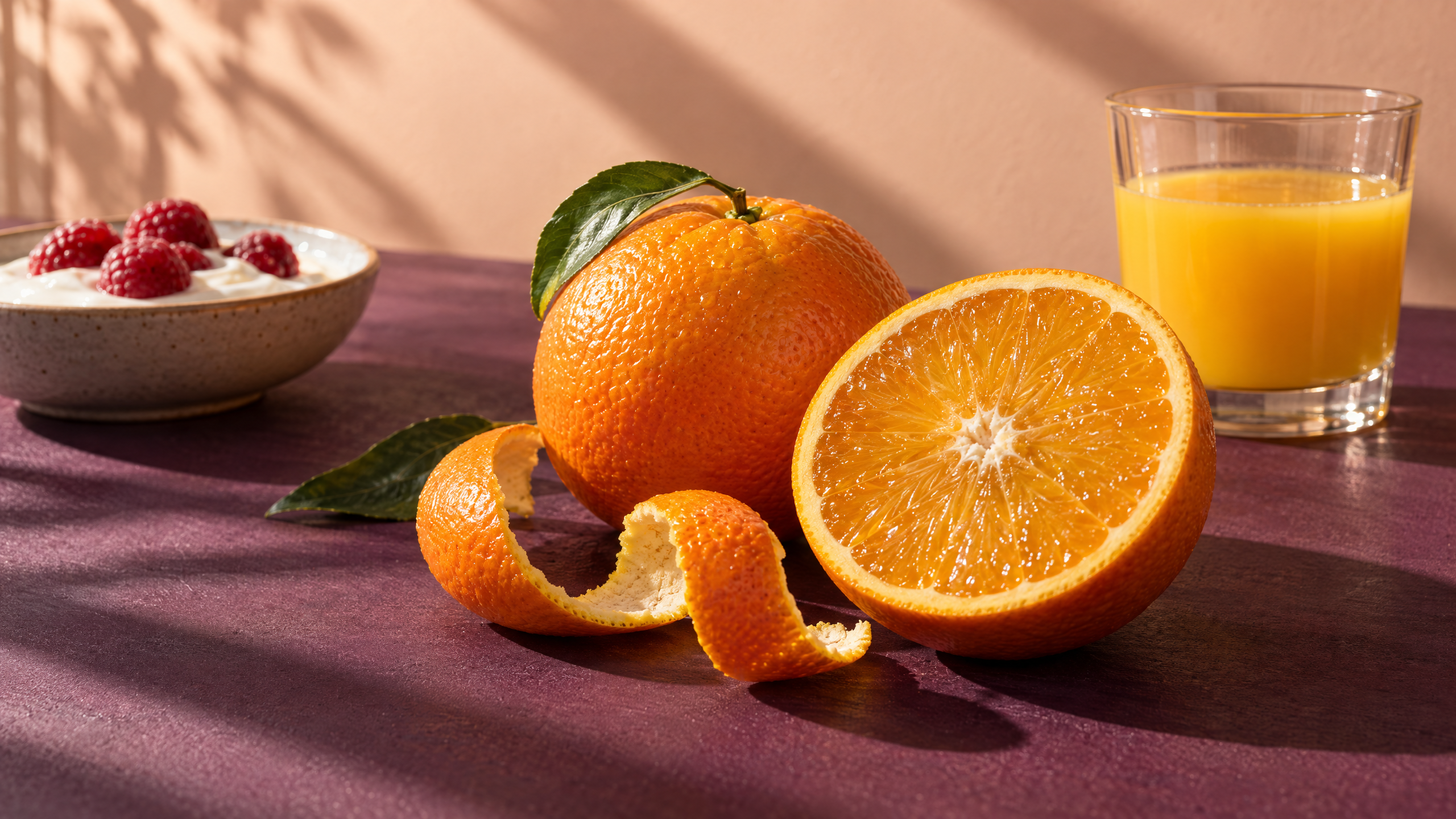
An orange, a glass of juice and plain yogurt can all contain sugars—but that does not make them nutritionally identical. Learn how whole-food context and the total, added and free-sugars definitions fit together.
An orange, a glass of juice and plain yogurt can all contain sugars. That does not make them the same food—or mean their sugar numbers tell the whole nutrition story.
The useful question is not simply, “Does this contain sugar?” It is, “Where does the sugar come from, what else does this food provide, and how does it fit into my meals?”
Start with the food, not a verdict
Whole fruit contains naturally occurring sugars alongside fiber and other food components. Milk and plain dairy yogurt also contain naturally occurring sugars, including lactose. Seeing sugar on a label does not, by itself, mean a manufacturer has added a sweetener. [1,3,4]
This is why avoiding every food with a total-sugars number can take familiar, nutritious options off the table unnecessarily. Equally, calling a food “natural” does not tell you everything about its nutritional value.
Three terms that answer different questions
Total Sugars on a U.S. Nutrition Facts label includes naturally occurring sugars plus any added sugars. The Added Sugars line identifies the portion that falls within the FDA's added-sugars definition. It is part of the total, not an extra amount to add on top. [1]
The FDA illustrates this with a yogurt label showing 15 grams of total sugars, including 7 grams of added sugars. The remaining 8 grams are naturally occurring. That example explains the label; it is not a measurement of every yogurt. Check the actual product and serving size. [1]
Free sugars is a different public-health term. WHO includes sugars added by a manufacturer, cook or consumer, as well as sugars naturally present in honey, syrups, fruit juices and juice concentrates. It is not simply another name for the U.S. Added Sugars line. [2]
These definitions help explain an apparent puzzle: 100% fruit juice can contain no added sugars while its naturally occurring sugars still count as free sugars. “No added sugar” and “no sugar” are not interchangeable statements. [1–3]
Whole fruit and juice are different choices
An orange keeps the fruit's edible structure and fiber. Juice does not offer the same whole-fruit structure. The distinction matters when thinking about what a food contributes—not because the sugar inside an orange has a special exemption from digestion. [3,4]
A practical starting point is to make whole fruit a familiar food choice rather than assuming a glass of juice is nutritionally identical. Juice can still be considered in the context of your overall diet; its ingredients, amount and role in the meal matter. There is no need to turn one glass into a judgment about a whole day.
Plain yogurt is another useful example
A plain dairy yogurt may show total sugars without added sugars because milk already contains sugar. A sweetened version may contain both. Comparing those two lines helps distinguish the foods more clearly than total sugar alone. [1,3]
If it suits your preferences, plain yogurt with fruit is one way to add sweetness and variety without relying on a pre-sweetened version. It is an option, not a rule that every flavored yogurt must be rejected. Look at the whole food and the rest of your eating pattern, too.
Honey and maple syrup still count
Honey, maple syrup and agave may differ in flavor, but they are not a way around the free-sugars category. FDA also includes sugars from honey and syrups within added sugars, with special labeling arrangements for single-ingredient sweeteners. Adding honey to yogurt is still adding a sweetener. [1–3]
Choosing a flavor you enjoy is different from assuming a sweetener becomes nutritionally unlimited because of its origin.
Make the next choice manageable
Try one food-based change rather than a complete pantry overhaul: keep whole fruit ready for a snack, compare the added-sugars lines on two similar yogurts using comparable serving sizes, or notice how often honey or syrup is added at the table.
The goal is not to eliminate every sweet taste or rank foods by one number. It is to understand the difference between a whole food, a sweetener and a label category—and use that information to build meals that work for you.
This article provides general nutrition education, not an individualized eating plan. If you have a condition that requires specific carbohydrate or dietary guidance, follow the plan agreed with your healthcare team.
Sources
[1] U.S. Food and Drug Administration. Added Sugars on the Nutrition Facts Label. Used for U.S. label definitions and the illustrative yogurt example, not as a current daily dietary target.
https://www.fda.gov/food/nutrition-facts-label/added-sugars-nutrition-facts-label
[2] World Health Organization. Reducing free sugars intake in adults to reduce the risk of noncommunicable diseases. Used for the definition of free sugars.
https://www.who.int/tools/elena/interventions/free-sugars-adults-ncds
[3] NHS. Sugar: the facts. Used for naturally occurring versus free sugars and everyday food examples; UK numerical limits are not presented as U.S. recommendations.
https://www.nhs.uk/live-well/eat-well/food-types/how-does-sugar-in-our-diet-affect-our-health/
[4] Harvard T.H. Chan School of Public Health, The Nutrition Source. Vegetables and Fruits. Used for whole-fruit variety, fiber and food context, not numerical disease-risk claims.
https://nutritionsource.hsph.harvard.edu/what-should-you-eat/vegetables-and-fruits/