
Protein does not have to mean powders or oversized portions. Build varied meals from familiar foods, understand why needs differ, and separate useful meal planning from promises about perfect timing.
Protein can fit into an ordinary day without turning every meal into a calculation. Beans in a lunch bowl, yogurt at breakfast, or tofu with vegetables at dinner are all familiar ways to include it. The useful goal is not to find the most protein-packed product. It is to build a varied eating pattern that fits your needs, preferences, and budget.
Protein helps build and maintain tissues, including muscle, skin, and internal organs.[1] But that does not mean everyone needs a high-protein diet—or a supplement. Most people can meet their needs through a variety of foods, according to the American Heart Association.[2]
Why needs differ
The adult Recommended Dietary Allowance is 0.8 grams of protein per kilogram of body weight per day.[2] This is a reference value for generally healthy adults, not a universal ceiling or a personalized target for every age, activity level, or medical situation.
Older age, pregnancy, breastfeeding, and regular training can change needs.[2,3] So can a health condition or difficulty eating enough overall. A registered dietitian can help translate those differences into realistic portions rather than simply adding a powder to an otherwise inadequate diet.
Kidney disease is an important reason not to follow generic high-protein advice. Some people with chronic kidney disease need to moderate protein intake; people receiving dialysis may need more. Too little can also lead to malnutrition. The right balance belongs in an individualized plan with the care team.[1]
Start with variety, not a single “best” food
Beans, lentils, chickpeas, soy foods, nuts, and seeds offer plant-based choices. Eggs, dairy foods, fish, seafood, and lean poultry or meat can also contribute.[2,3] You do not have to include every category, and foods are not interchangeable gram for gram: portions, preparation, and the rest of the meal matter.
Think about what comes alongside the protein. Beans and lentils also provide fiber, for example. The American Heart Association encourages plant proteins and, where included, fish and lean animal choices rather than relying on processed or fatty meats.[2] Protein should accompany vegetables, fruit, whole grains, and other foods—not crowd them out.[3]
A flexible day of meal ideas
At breakfast, try plain yogurt with oats and fruit, eggs with whole-grain toast and vegetables, or a tofu scramble. Choose an option that fits your eating pattern rather than treating breakfast as a mandatory protein challenge.
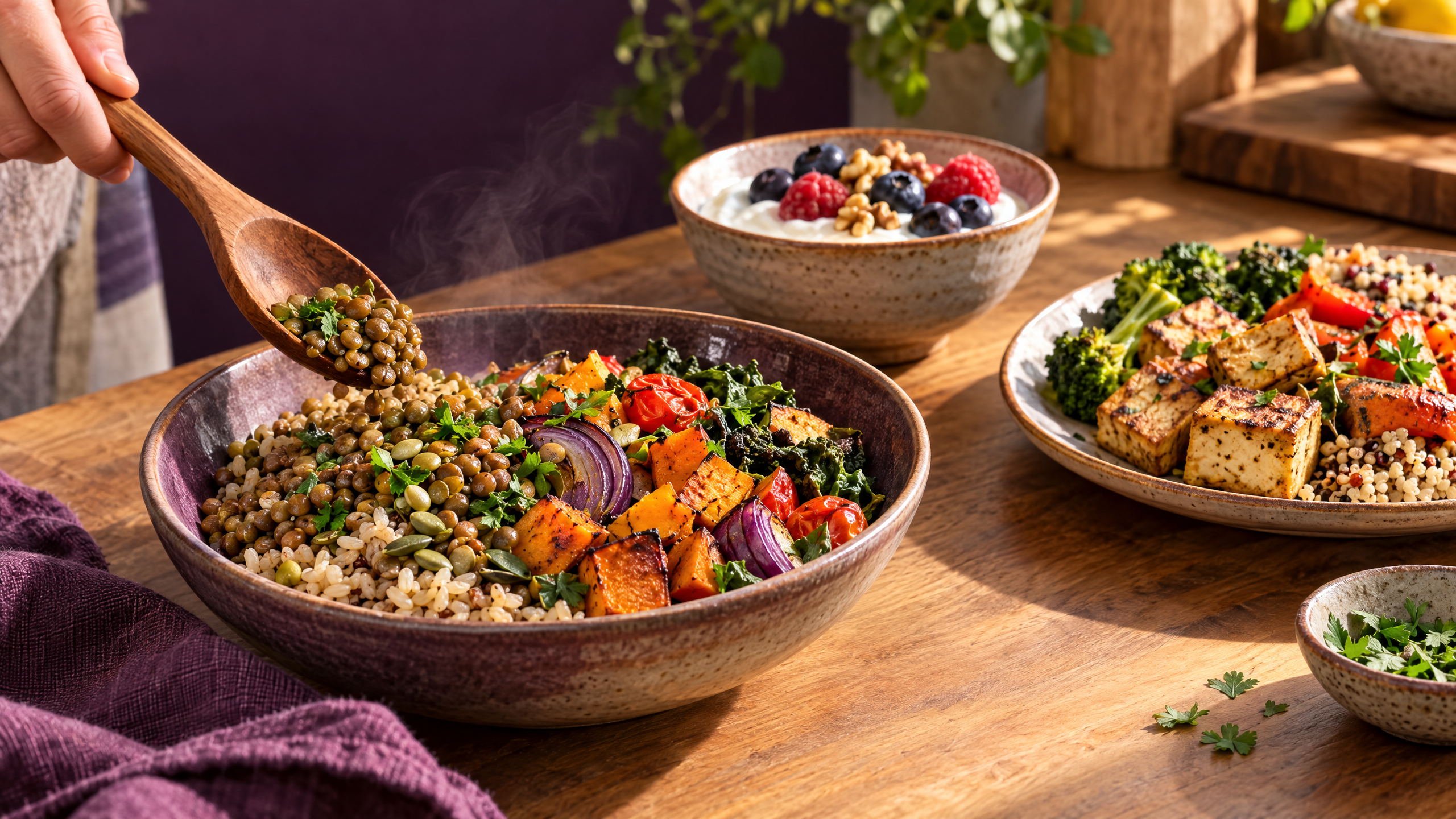
For lunch, add lentils or chickpeas to a grain-and-vegetable bowl, use beans in a soup, or build a sandwich around an appropriate protein food. Leftovers can be useful; lunch does not need a separate set of specialty ingredients.
At dinner, combine vegetables and a grain or other starchy food with tofu, beans, fish, or poultry, according to your preferences. If a snack is useful for your appetite and routine, yogurt, hummus, or nuts are options—not an extra eating occasion everyone must add.
These are adaptable ideas, not a complete meal plan or a guarantee of meeting a particular protein target. Portions and total food intake still matter. Account for allergies, dietary restrictions, and any prescribed eating plan.
“Through the day” is a planning tool, not a timing promise
Including a protein food at more than one meal can make it easier to notice variety and avoid leaving all your planning until dinner. It does not establish that everyone needs identical grams at every meal.
Reviews of protein distribution describe uncertainty about long-term effects on muscle outcomes, with results influenced by total intake, age, activity, and study design.[4,5] Short-term changes in muscle protein synthesis are not the same as proof of lasting gains in strength or muscle mass. This guide therefore does not prescribe a meal-by-meal threshold or claim that a particular schedule improves metabolism.
Where powders fit—and where they do not
A protein supplement can be a practical option in an individualized plan, but it is not automatically necessary. Mayo Clinic Health System recommends generally meeting protein needs with foods when possible.[3] A powder cannot replace the variety of an overall eating pattern, and choosing one does not solve the question of how much you personally need.
For a manageable first step, look at one usual meal. Is there a protein food you enjoy? Are there vegetables or fruit and another food group alongside it? Adjusting that meal may be more useful than chasing the largest number on a package.
*Educational information only; not individualized nutrition or medical advice.*
References
1. National Institute of Diabetes and Digestive and Kidney Diseases: Healthy Eating for Adults with Chronic Kidney Disease.
https://www.niddk.nih.gov/health-information/kidney-disease/chronic-kidney-disease-ckd/healthy-eating-adults-chronic-kidney-disease
2. American Heart Association: Protein—What’s Enough?
https://www.heart.org/en/healthy-living/healthy-eating/eat-smart/nutrition-basics/protein-and-heart-health
3. Mayo Clinic Health System: Are You Getting Enough Protein?
https://www.mayoclinichealthsystem.org/hometown-health/speaking-of-health/are-you-getting-too-much-protein
4. Hudson et al., 2020: Protein Distribution and Muscle-Related Outcomes—Does the Evidence Support the Concept?
https://www.mdpi.com/2072-6643/12/5/1441
5. Layman, 2024: Impacts of Protein Quantity and Distribution on Body Composition.
https://www.frontiersin.org/journals/nutrition/articles/10.3389/fnut.2024.1388986/full